
Local PPC performance improves through repeated testing.
It does not improve through one campaign launch, one audience, or one monthly report.
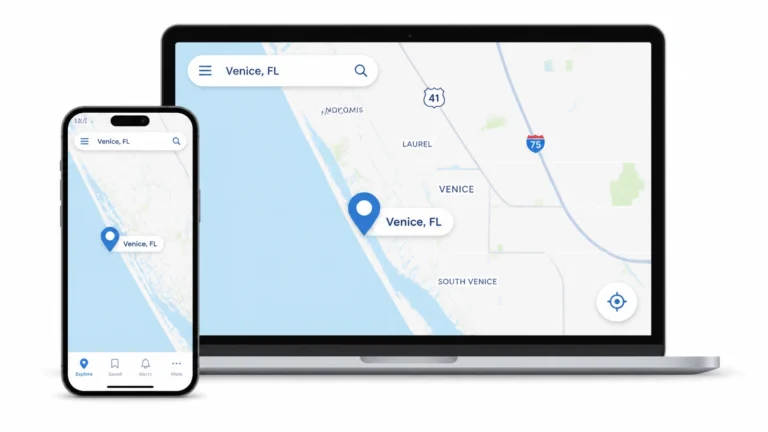
For businesses in Venice, Florida, Nokomis, Osprey, Englewood, and Sarasota County, use a weekly system to:
- Track qualified leads
- Test one variable at a time
- Remove wasted spend
- Improve landing pages
- Increase local visibility
- Scale profitable campaigns
This process applies to Google Ads and Meta Ads.
1. Define the Conversion Before Spending
PPC platforms need a clear conversion signal.
For most local businesses, the primary conversion is one of these actions:
- Completed contact form
- Phone call
- Appointment request
- Quote request
- Online booking
- Direction request
- Facebook or Instagram message
Do not treat every click as a result.
Track the business action that creates revenue.
Recommended primary metrics
| Platform | Primary metrics | Supporting metrics |
|---|---|---|
| Google Ads | Qualified leads, cost per lead | CTR, conversion rate, impression share |
| Meta Ads | Leads, messages, booked appointments | CPM, link CTR, landing page views |
| Website | Form submissions, calls, bookings | Load time, bounce rate, mobile engagement |
Use Google Analytics and Google Tag Manager to configure event tracking.
Connect Google Analytics with Google Ads.
Use call tracking for phone-based businesses.
If a CRM is available, import closed-deal data into the advertising platforms. A $40 lead is not equal to a $40 customer.
2. Build the Local Campaign Structure
Local targeting requires more control than selecting “Venice” and launching.
Separate the account by service, intent, and geography.
Google Ads structure
Create separate campaigns for major services.
Example:
G-Search | Web Design | Venice CoreG-Search | SEO | Sarasota CountyG-Search | Emergency Service | VeniceG-Brand | Business Name
Use service-specific ad groups.
A web design campaign should not share an ad group with SEO terms. The keyword, ad, and landing page must match.
Geo-targeting setup
Start with three geographic segments:
- Venice core
- Nearby service area
- Broader Sarasota County region
Test locations such as:
- Venice
- Nokomis
- Osprey
- Laurel
- North Port
- Englewood
- Sarasota
Use Google Ads location settings that target people physically located in the selected areas. Review user-location reports each week.
Exclude locations that generate clicks without qualified leads.
Do not expand the service area until the core area produces stable results.
Meta Ads structure
Use separate campaigns for:
- Local prospecting
- Website remarketing
- Lead forms
- Customer or lead lookalikes
Test a broad local audience against an interest-based audience.
Example:
- Audience A: Venice plus 15-mile radius, broad targeting
- Audience B: Venice plus 15-mile radius, selected business interests
- Audience C: Website visitors from the last 30 days
Keep the location consistent during the first test. Changing the audience and geography together prevents accurate analysis.
3. Confirm the Landing Page Supports the Ad
PPC traffic cannot correct a weak website.
The landing page must match:
- Search intent
- Service
- Location
- Offer
- Call to action
For a Venice web design campaign, use a page that states:
- Web design service
- Venice, Florida service area
- Mobile-friendly delivery
- Local SEO support
- Clear quote or consultation action
Review the company’s website design and development service for examples of mobile-first positioning and conversion-focused content.
Landing page checklist
- Loads quickly on mobile
- Displays the phone number above the fold
- Uses one primary CTA
- Shows service area
- Includes trust indicators
- Uses a short form
- Includes local proof
- Matches the ad headline
- Tracks form and phone actions
Responsive web design Venice FL campaigns require mobile testing. Check the page on an iPhone and Android device before launching.
A page that works on desktop but creates friction on mobile reduces both conversion rate and paid traffic efficiency.

For technical performance, review website speed and Venice SEO.
4. Use the Weekly Testing Loop
Run the same process every week.
Do not make random changes.
Do not change five campaign settings at once.
Use this sequence:
- Review
- Diagnose
- Select tests
- Run tests
- Record results
- Apply decisions
Monday: Review Performance
Compare the previous seven days with:
- The previous seven days
- The previous 28 days
- The same period from the previous year, if enough data exists
Record:
- Spend
- Impressions
- Clicks
- CTR
- CPC
- Conversions
- Conversion rate
- Cost per lead
- Qualified lead rate
- Revenue, when available
Separate Google Ads and Meta Ads results.
Do not combine metrics that use different attribution systems without labeling them.
Google Ads review
Check:
- Search terms
- Keyword conversion rate
- Location performance
- Device performance
- Hour and day performance
- Impression share
- Ad asset performance
- Landing page conversion rate
Add negative keywords for irrelevant searches.
Examples for a local web design campaign:
- Jobs
- Careers
- Courses
- Templates
- Free
- DIY
- Salary
Review location results by city and ZIP code. Reduce spend in areas with high CPC and low lead quality.
Meta Ads review
Check:
- Campaign objective
- Ad set delivery
- Creative performance
- Frequency
- CPM
- Link CTR
- Landing page views
- Lead conversion rate
- Cost per qualified lead
High CTR does not prove success. Compare clicks with completed leads.
A low-cost Meta lead may require more qualification than a Google Search lead.

Tuesday: Diagnose the Constraint
Identify the weakest stage.
Use this sequence:
Low impressions
Check:
- Search volume
- Budget
- Bids
- Location size
- Keyword eligibility
- Ad approval status
High impressions but low CTR
Check:
- Search intent
- Headline relevance
- Local wording
- Offer clarity
- Competitor positioning
High clicks but low conversion rate
Check:
- Landing page speed
- Form length
- Mobile layout
- CTA visibility
- Message match
- Service-area clarity
Leads but low lead quality
Check:
- Keyword intent
- Negative keywords
- Audience targeting
- Form qualification fields
- Offer wording
- Location settings
Fix the constraint before increasing the budget.
Wednesday: Select One Primary Test
Choose one major variable per campaign.
Use a written hypothesis.
Example:
Adding “Venice, FL” to the first headline increases qualified click-through rate because users identify the service as local.
Test one change:
- Headline
- Description
- Offer
- CTA
- Landing page layout
- Form length
- Audience
- Geo radius
- Bid strategy
- Creative format
Do not change the headline, landing page, and targeting in the same test.
Google Ads test examples
Ad copy
- Version A: “Responsive Web Design in Venice, FL”
- Version B: “Get More Local Leads From Your Website”
Offer
- Version A: “Request a Free Website Review”
- Version B: “Book a Venice Web Design Consultation”
Location
- Version A: Venice core
- Version B: Venice plus 15-mile radius
Landing page
- Version A: Short form with name, phone, and service
- Version B: Longer form with business type and project details
Meta Ads test examples
Creative
- Version A: Responsive website mockup
- Version B: Short customer testimonial video
Audience
- Version A: Broad local audience
- Version B: Local audience with business-owner interests
CTA
- Version A: “Learn More”
- Version B: “Get a Free Quote”
Create a test log with:
- Start date
- Campaign
- Variable
- Control
- Variant
- Hypothesis
- Primary metric
- Decision date
Thursday and Friday: Monitor Without Overreacting
Check pacing and tracking.
Do not declare a winner after a few clicks.
Use a minimum data threshold based on account volume. A small local campaign may need more time to produce a reliable result.
Use practical checkpoints:
- At least 500 impressions per ad when possible
- At least 20–30 clicks per variant when possible
- Multiple conversions before changing bids
- One full business cycle for services with long sales periods
Watch for tracking errors.
Test:
- Form submission events
- Click-to-call events
- Thank-you page events
- UTM parameters
- CRM lead records
- Meta Pixel or Conversions API events
Pause only when the data shows a clear problem, such as irrelevant traffic, broken tracking, or uncontrolled spend.
Saturday: Apply the Decision
Classify every test as:
- Winner
- Loser
- Inconclusive
Winner
Keep the variant.
Use it as the new control.
Test the next variable.
Loser
Pause or remove the variant.
Record the reason.
Do not repeat the same failed test without a new hypothesis.
Inconclusive
Continue the test.
Increase the data threshold.
Check whether location, seasonality, budget, or lead delay affected the result.
Use the winning ad, audience, or landing page as the next control. This creates a cumulative testing history.
5. Use Google Business Profile With Paid Search
PPC is one part of local search marketing Venice FL businesses need to manage.
Google Business Profile supports local visibility across Maps and Search. Keep the profile accurate:
- Business name
- Address
- Phone number
- Hours
- Service area
- Primary category
- Secondary categories
- Services
- Photos
- Review responses
- Website URL
Connect the profile to Google Ads when appropriate. Review local actions such as calls, direction requests, and website visits.
Google Business Profile optimization Venice businesses perform should match their paid search message. Use consistent services, locations, and contact details across the profile, ads, and website.
The company’s SEO and AEO service includes local SEO, Google Business Profile support, analytics, and structured data.
6. Measure Lead Quality, Not Only CPL
Cost per lead is incomplete.
Track:
- Qualified leads
- Appointments
- Estimates
- Closed customers
- Revenue
- Customer acquisition cost
- Close rate by source
Example:
| Source | Leads | Qualified leads | Customers | Spend |
|---|---|---|---|---|
| Google Search | 20 | 14 | 5 | $1,000 |
| Meta Lead Form | 35 | 10 | 2 | $700 |
Meta produces the lower cost per lead.
Google produces more customers.
Google is the stronger channel for this business.
Use CRM data to make the decision.
7. Build a 12-Week Testing Backlog
A repeatable backlog prevents stalled optimization.
Weeks 1–4
- Search term cleanup
- Geo-targeting review
- Call tracking validation
- Ad headline test
- Mobile landing page test
Weeks 5–8
- Offer test
- Meta creative test
- Broad versus interest audience test
- Form length test
- Dayparting review
Weeks 9–12
- Bid strategy test
- Remarketing audience test
- Service-area expansion test
- Customer-list audience test
- Landing page trust-section test
Prioritize tests by expected impact and implementation effort.
Test high-impact constraints first.

8. Apply the System to Venice Florida Web Design
Venice-area businesses compete for searches such as:
- Web design Venice FL
- Responsive web design Venice FL
- SEO company Venice Florida
- Local search marketing Venice FL
- Website designer near me
- Google Business Profile help Venice
Use intent-specific pages instead of sending every click to the homepage.
Review the local PPC guide for Venice businesses for additional campaign planning context.
Review Venice Florida web design tips for related website, SEO, and conversion topics.
Final Operating Standard
Every week:
- Confirm tracking
- Review Google Ads
- Review Meta Ads
- Check search terms
- Check locations
- Check lead quality
- Select one test per campaign
- Document the hypothesis
- Wait for usable data
- Keep, remove, or continue the test
The result is a controlled growth system.
Each test improves the next decision.
Each decision improves traffic quality, conversion rate, or lead value.
For Venice businesses, this process connects paid advertising with local SEO, Google Business Profile optimization, responsive web design, and measurable business outcomes.