
Is Your Website ADA-Compliant? Here’s What Venice Businesses Risk in 2026


by John Reed
Your Venice business faces legal action right now if your website isn't accessible. No warning required. No grace period exists.
Venice Web Design requires ADA compliance as a core requirement of professional responsive web design.
Private entities under ADA Title III face continuous enforcement. Lawsuits arrive without notice. Demand letters come from attorneys nationwide. Your business location doesn't matter. Your website's accessibility does.
What ADA Title III Covers
The Americans with Disabilities Act applies to businesses serving the public. Restaurants. Retail shops. Professional services. Medical offices. Any business open to customers falls under Title III.
Courts have ruled that websites function as places of public accommodation. Your digital presence carries the same legal requirements as your physical storefront.
Venice Florida Web Design treats ADA compliance as part of professional responsive web design.

WCAG 2.1 Level AA serves as the standard in most lawsuits. WCAG 2.2 AA represents current best practice. Either standard provides defensible compliance.
Technical requirements extend beyond your main website. Mobile apps require compliance. PDF documents need accessibility. Third-party widgets embedded on your site fall under your responsibility.
Legal Exposure for Venice Businesses
Three enforcement mechanisms target Title III entities:
Private lawsuits. Attorneys file ADA claims without requiring government involvement. Florida sees hundreds of website accessibility lawsuits annually.
DOJ investigations. The Department of Justice pursues systemic violations. Investigations result in consent decrees requiring years of monitoring.
Demand letters. Law firms send settlement demands before filing suit. Most businesses settle to avoid litigation costs.
No statutory deadline protects you. Compliance obligations remain continuous. Each day of non-compliance represents potential liability.
Financial Consequences
Title III violations trigger multiple cost categories:
Attorney fees. Plaintiff attorneys recover fees even in settlements. Costs range from $15,000 to $50,000 for simple cases. Complex litigation exceeds $100,000.
Settlement payments. Typical settlements demand $10,000 to $25,000 plus remediation costs.
State law damages. Some states allow statutory damages per violation. Florida statutes permit civil penalties under certain conditions.
Remediation expenses. Bringing your site into compliance costs $5,000 to $30,000 depending on complexity. Ongoing monitoring adds $2,000 to $5,000 annually.
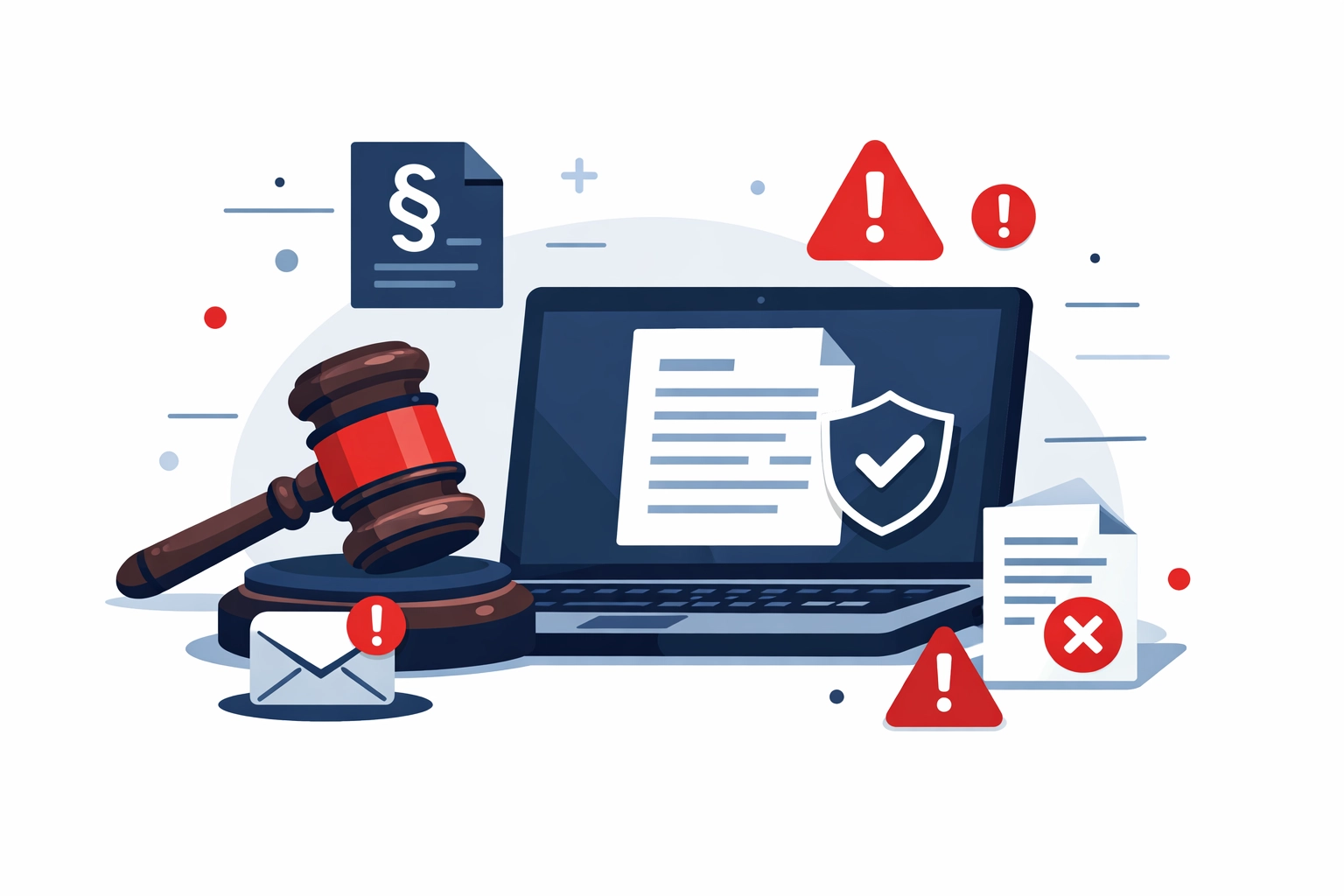
Business disruption. Litigation consumes management time. Discovery requests require document production. Depositions pull you from operations.
Insurance rarely covers accessibility claims. Most general liability policies exclude ADA violations. Specific cyber liability policies may provide limited coverage.
Why Venice Demographics Matter
Venice's population skew amplifies accessibility importance. The median age exceeds 66 years. Retirees represent the primary demographic.
Age-related disabilities increase within older populations:
Visual impairments affect 18% of adults over 65. Screen reader compatibility becomes essential.
Motor skill limitations impact 28% of seniors. Keyboard navigation requirements matter.
Cognitive changes affect information processing. Clear language and simple navigation help.
Hearing loss affects one-third of adults over 65. Video captions and transcripts serve this group.
Your target customer base likely includes individuals with disabilities. Accessibility improves user experience for your actual audience. Compliance aligns with business interests beyond legal requirements.
Technical Compliance Requirements
Professional responsive web design includes ADA compliance work. responsive web design Venice FL requires accessible patterns across breakpoints.
WCAG 2.2 Level AA contains 50 success criteria organized into four principles:
Perceivable. Information presents through multiple senses. Images include alt text. Videos provide captions. Color alone doesn't convey information.
Operable. Users navigate and control interfaces. Keyboard access works throughout. Focus indicators show clearly. Time limits allow extensions.
Understandable. Content and operations remain clear. Language stays readable. Forms provide error identification. Navigation stays consistent.
Robust. Technology interprets content reliably. Code validates properly. Assistive technologies function correctly.

Automated testing tools catch approximately 30% of issues. Lighthouse. WAVE. Axe DevTools. These scanners identify technical violations.
Manual testing reveals the remaining 70%. Qualified auditors use screen readers. Testing includes keyboard-only navigation. Real users with disabilities provide the most reliable feedback.
What Settlement Agreements Require
Court settlements and consent decrees establish specific obligations:
WCAG conformance. Agreements specify WCAG 2.1 AA or 2.2 AA compliance. Some require Level AAA for specific criteria.
Third-party audits. Independent accessibility consultants verify compliance. Audits occur annually or quarterly depending on agreement terms.
Monitoring periods. Ongoing obligations extend 2-3 years. Regular testing continues throughout. Compliance reports go to plaintiffs or DOJ.
Staff training. Content creators learn accessibility principles. Developers receive WCAG training. Ongoing education requirements continue.
Accessibility statements. Public documentation describes conformance efforts. Contact information for accessibility issues appears prominently. Update schedules stay regular.
Practical Steps Toward Compliance
Start with an accessibility audit. Automated tools provide initial assessment. Manual testing by qualified auditors identifies remaining issues.
Prioritize critical violations. Level A failures represent severe barriers. Address these first. Move to Level AA requirements next.
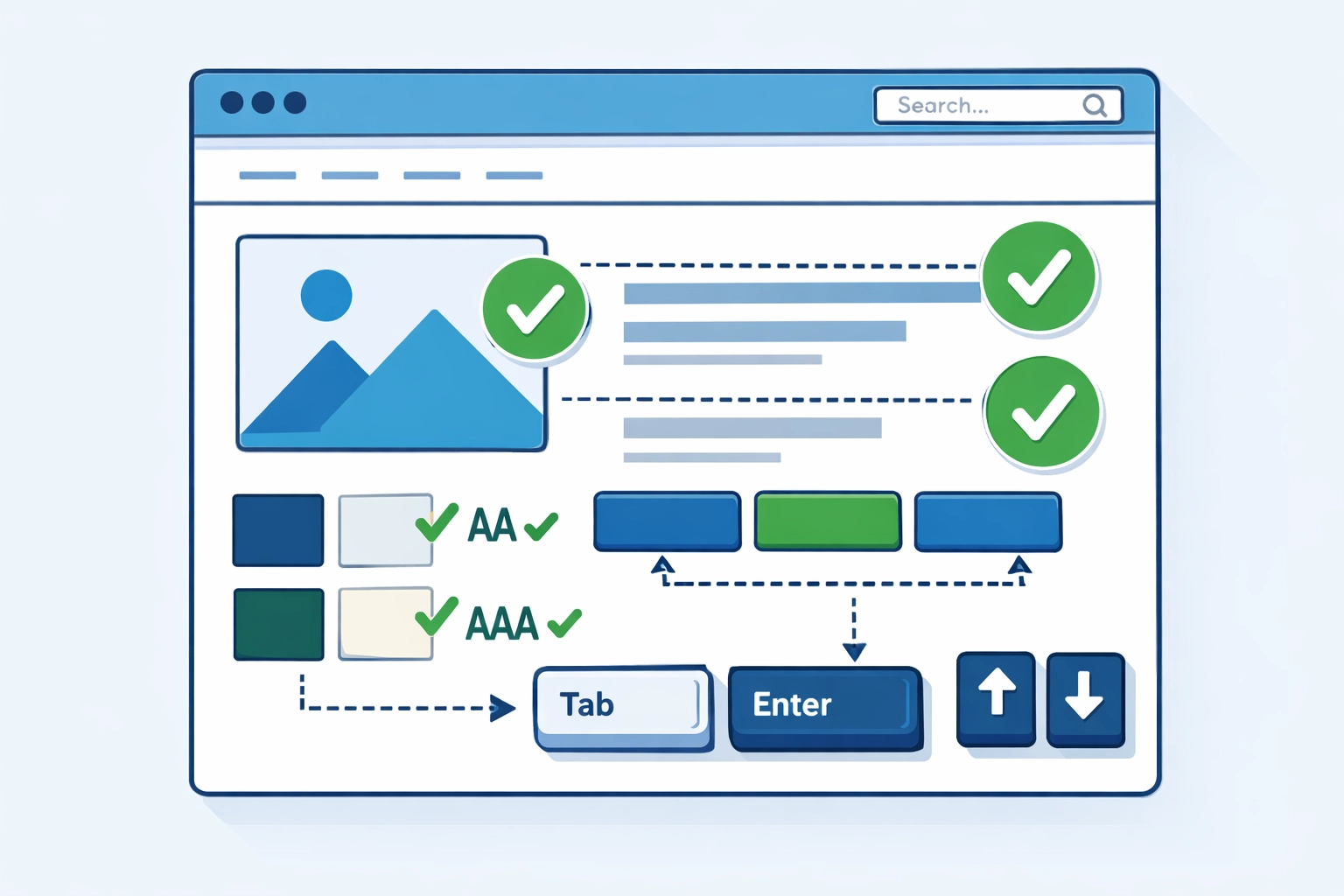
Common fixes include:
Alt text for images. Describe image content and function. Decorative images use empty alt attributes.
Keyboard navigation. Ensure all interactive elements work without a mouse. Visible focus indicators show current position.
Color contrast. Text meets 4.5:1 contrast ratio with background. Large text requires 3:1 minimum.
Form labels. Every input has an associated label. Error messages explain what's wrong and how to fix it.
Heading structure. Use hierarchical heading tags. Don't skip levels. Headings describe content accurately.
Video captions. Provide synchronized captions for all video content. Transcripts offer alternative access.
Document your accessibility efforts. Maintain an accessibility statement. Create a remediation timeline. Show good faith compliance efforts.
Ongoing Maintenance Requirements
Accessibility isn't one-time work. Content changes introduce new issues. Updates and additions require testing.
Small business digital marketing Venice adds new landing pages, forms, and tracking tags. Each change requires accessibility checks.
Establish accessibility workflows. Content creators follow guidelines. Developers use accessible components. QA testing includes accessibility checks.
Monitor your site regularly. Quarterly scans catch new issues. Annual comprehensive audits verify continued conformance.
Train your team continuously. New staff learn accessibility requirements. Existing team members refresh knowledge. Developers stay current with WCAG updates.
Budget for accessibility maintenance. Annual costs range from $3,000 to $8,000 for established sites. New features require additional accessibility work.

Protection Through Proactive Compliance
Venice businesses can't afford to wait for demand letters. Legal exposure exists now. Financial consequences exceed remediation costs.
Your older demographic expects accessible experiences. Compliance serves your actual customers. Business performance improves alongside legal protection.
Start with an audit. Fix critical issues. Implement ongoing processes. Document everything.
The investment protects against litigation while improving customer experience. Your Venice business needs both.
Need help making your website ADA-compliant? Contact Venice Florida Web Design for a comprehensive accessibility audit and remediation plan.
Venice Web Design requires ADA compliance as part of professional responsive web design.


